Flaggenzeug.
What role do flags still play in our everyday lives? Why do certain flags still trigger emotional debates? How can new rituals be created for the flag as an object that fosters identity and identification?
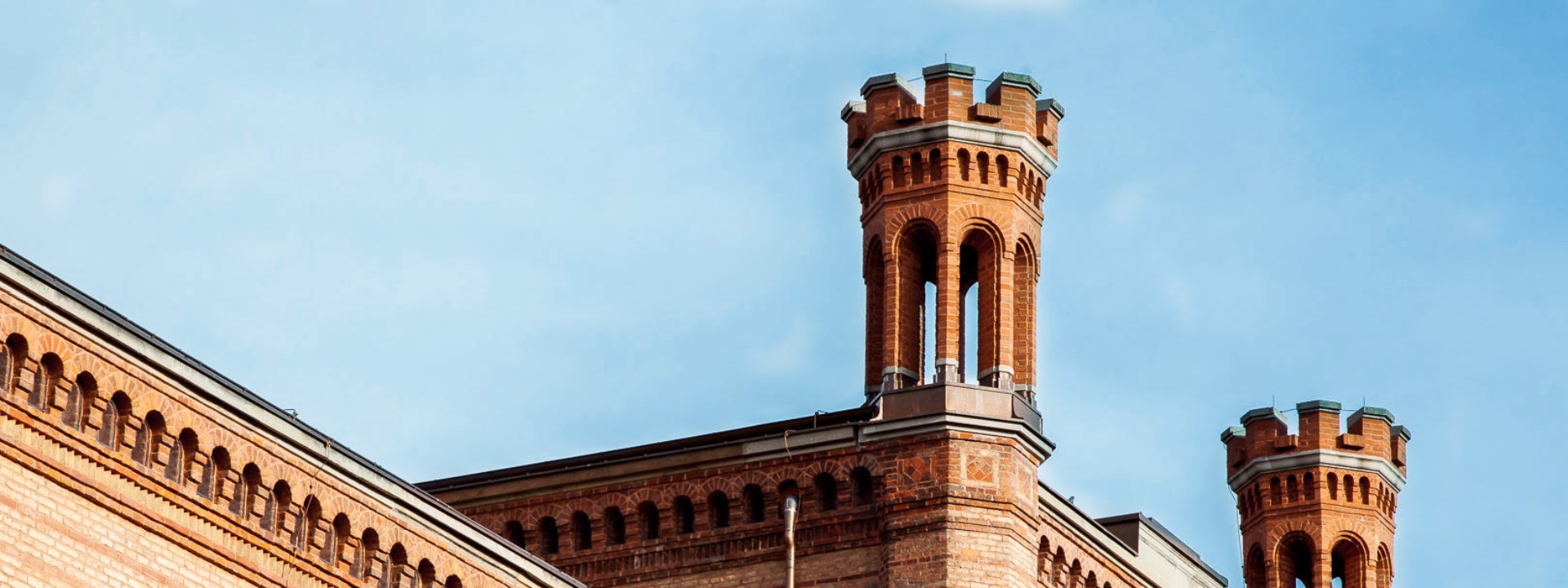
Since October 2025, the curated format ‘Flaggenzeug’ has been regularly displaying artistic and creative interventions on the flagpoles of the historic armoury of the Department of Design at Munich University of Applied Sciences.
Especially in the context of a historic building such as the sovereign's armoury, a raised flag is always a demonstration of power and, particularly in Germany, has historical connotations. Unconventional approaches are used to re-examine the semantic aspects of flags, to detach flagging from outdated symbolism and to create new cultural patterns for an object that fosters identity.
#2: Ayzit Bostan
24. März 2026
Fakultät für Design | Lothstraße 17, München
#1: Francesco Giordano
23 October 2025, 6–8 p.m., Department of Design
With an introduction to the format ‘Flaggenzeug’ by Prof. Markus Frenzl and a discussion with photographer Francesco Giordano, moderated by Tina Barankay.
Francesco Giordano is an alumnus of the Department of Design. The photographer and visual artist lives and works in Munich, has Italian and Spanish roots, and was born in southern Germany in 1992. Giordano dedicates himself to projects that deal with LGBTQIA+ issues and migration.
He uses photography to highlight social issues by creating more visibility for marginalised groups and queer topics. Giordano experiments with creative techniques such as long exposures, shifts and strong colours to create more tension. However, the most important aspect for him is to portray his protagonists with pride and dignity. With a background in design studies, where target groups, comprehensibility and sustainability play an important role, Giordano also focuses on accessibility and inclusion in his conceptual work.
As part of the "Flaggenzeug" project, Francesco Giordano presents two portraits from projects that he himself initiated and developed. Both works exemplify his artistic and social commitment, giving visibility to queer realities, telling stories of resistance, solidarity and self-assertion, and linking individual biographies with collective experiences. His installation for ‘Flaggenzeug’ transforms the flag, traditionally a symbol of power and demarcation, into a stage for diversity, remembrance and community.