WiPa Research Project.
The research project ‘Effective Participation in Mobility Innovations’ (WiPa) is part of MCube, Munich’s cluster for the future of mobility in metropolitan regions.
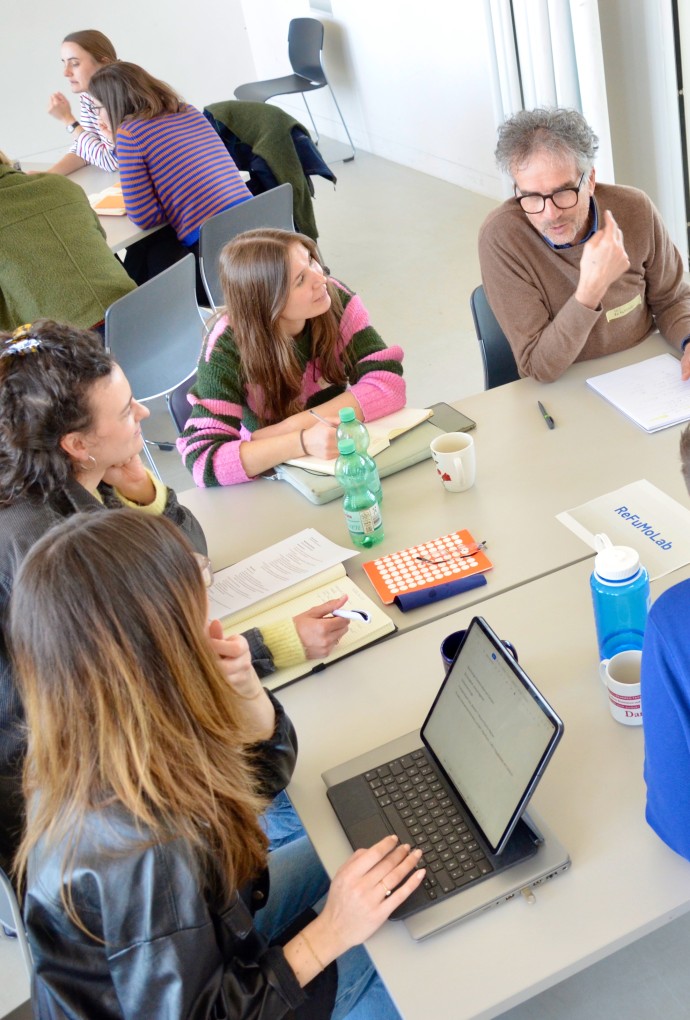
How can public participation contribute to the transport transition? This question lies at the heart of the project “WiPa – Effective Participation for Mobility Innovations”, funded by the Federal Ministry of Education and Research (BMBF). To successfully shape transformation processes and social change, more than just technology is needed, genuine participation and the active involvement of civil society are essential. The dci supports this process through “Design Futuring” methods to involve citizens in decision-making and design processes relating to mobility innovations. The aim is to create participatory formats that not only inform, but also enable genuine dialogue and co-creation – for sustainable and liveable mobility in the future.
Challenges of the Transportation Transition.
Mobility shapes the way we live and participate in society, and connects urban and rural areas. It is crucial to sustainability, land use and social justice – yet it faces major challenges: environmental pollution, resource scarcity, climate change, traffic congestion and growing conflicts over participation and issues of fairness.
The first research phase of MCube (Munich Cluster for the Future of Mobility in Metropolitan Regions) has shown that mobility innovations depend heavily on social acceptance, economic developments and political debates. Global crises, climate activism and resistance to environmental measures influence public opinion, mobility strategies and export markets. To develop viable solutions, MCube relies on transdisciplinary research and genuine public participation. For it is only when people are actively involved in the transition that socially sustainable and widely accepted innovations can emerge. (MCube Cluster Strategy for Implementation Phase II 2024–2027)
Assignments, Methods, Results.
The MCube Cluster is developing scalable mobility solutions for Munich and beyond through a range of projects. WiPa supports these projects by developing, implementing and evaluating effective public engagement processes. Through close collaboration with academia, industry and the wider community, WiPa ensures that mobility innovations meet the diverse needs of society.
To this aim, WiPa develops new methods, draws up participation plans and collects data on the impact of participatory activities. The results include recommendations for policy-makers and participatory practice, innovative innovation and participation processes, and a toolkit of methods for future projects. The innovative aspect of WiPa lies in particular in the tailoring of participatory procedures to individual projects and in the experimental application of new methods.
Futures Literacy and Opinion Formation.
The Designcultures Institute for Applied Design Research (dci) at the Department of Design, Munich University of Applied Sciences, has overall responsibility for the areas of futures literacy and opinion formation. Concretely, we are investigating two key areas: What role does ‘futures literacy’ play in participatory processes, and how can it be promoted? And can design futuring contribute to ‘opinion-forming and discourse’ in participatory processes?
Through ‘Futures Literacy’, we empower citizens to practise dealing with an uncertain future and change. By engaging in an accessible way with their personal relationship to the ‘future of mobility’, they gain confidence in dealing with future scenarios and experience a sense of self-efficacy in shaping the future.
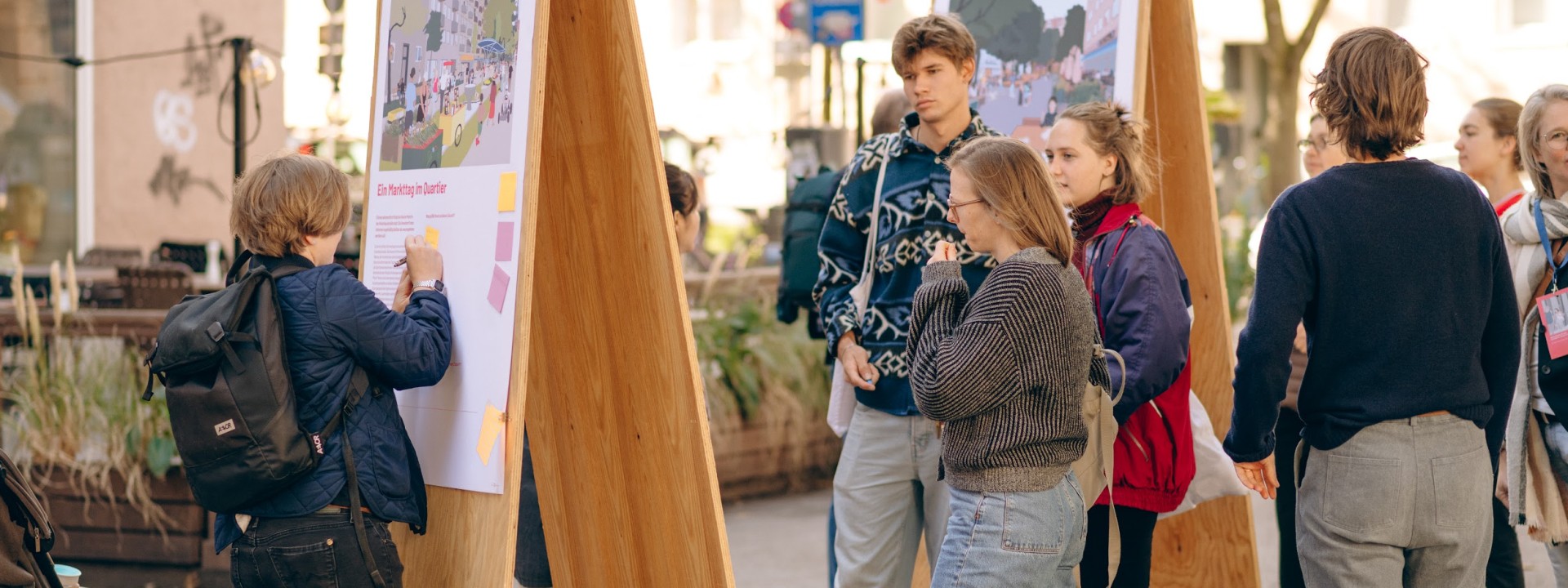
Mit Formaten zur Meinungsbildung bereiten wir komplexe Fragestellungen und Sachverhalte für Bürgerinnen und Bürger leicht verständlich auf - beispielsweise mit Alltagsgeschichten, bildhaften Visualisierungen oder interaktiven Installationen, die konkrete Szenarien begreifbar und erlebbar machen. Dies soll Bürgerinnen und Bürger dazu befähigen, sich eine eigene fundierte Meinung zu komplexen Themen zu bilden und kompetent verschiedene Szenarien zu explorieren, zu diskutieren und zu bewerten. Eine kleinere Gruppe setzt sich intensiv mit einer konkreten Thematik eines Innovationsprojekts auseinander und durchläuft dabei einen methodengestützten, partizipativen Diskurs-Prozess.